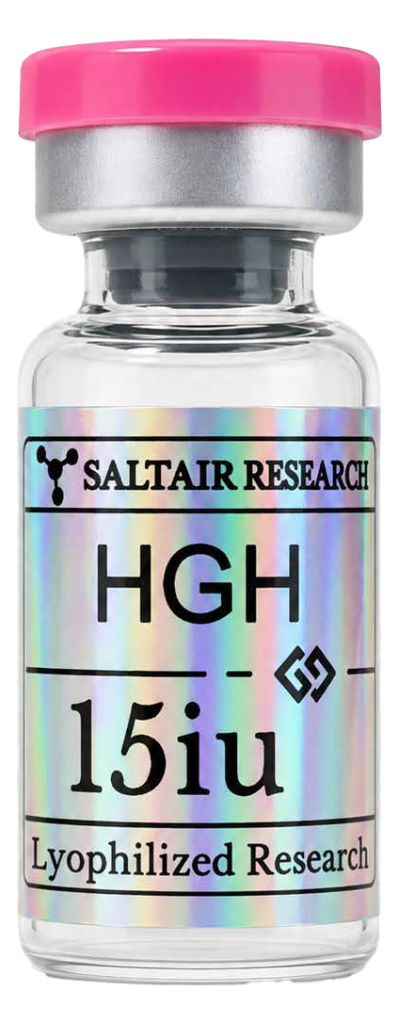
HGH — human growth hormone, known generically as somatropin — is one of the most thoroughly characterized hormones in medicine. Produced by the pituitary gland, it drives growth in childhood and continues to regulate metabolism, body composition, and tissue repair throughout life.
What you’re reading about
“HGH” refers to recombinant human growth hormone, biologically identical to the hormone the body makes. It is a well-established, prescription-regulated therapeutic; this profile is educational background on the hormone’s biology and research — not guidance on use.
Mechanism
Growth hormone acts directly and through IGF-1 (insulin-like growth factor 1), which it prompts the liver to produce. Together they influence protein synthesis, fat metabolism, bone density, and cellular growth and repair.
Research applications
- Growth hormone deficiency and growth disorders.
- Body composition, metabolism, and the GH/IGF-1 axis.
- Tissue repair and recovery research.
Clinical outlook
Unlike most compounds in this library, growth hormone is already a fully approved therapeutic with a decades-deep clinical record, used medically for growth hormone deficiency and several other specific conditions. Because it is a potent, tightly regulated hormone, its study emphasizes controlled clinical settings — and research continues to map the GH/IGF-1 axis’s role in metabolism, aging, and recovery.
Frequently asked questions about HGH (Somatropin)
Straight answers to the questions researchers most often ask. Everything below summarizes published preclinical and clinical literature; it is not medical advice, and these compounds are supplied for laboratory research only.
What is HGH (somatropin)?
HGH is recombinant human growth hormone, a 191-amino-acid protein identical to the hormone the pituitary produces. Generically named somatropin, it is one of the most thoroughly characterized hormones in medicine and drives growth, metabolism and tissue repair.
Is HGH FDA approved?
Yes — somatropin is an FDA-approved prescription medicine for growth-hormone deficiency and several specific conditions. The research-grade product sold here is for laboratory use only and is not a substitute for prescribed therapy.
What does IU mean on HGH?
IU (international units) is the biological-activity unit used for growth hormone; 1 mg of somatropin equals 3 IU. Our 15 IU vial therefore contains about 5 mg.
How does HGH work?
Growth hormone binds its receptor on liver, muscle, bone and fat cells and stimulates production of IGF-1, which mediates most of its growth effects. It also acts directly to increase lipolysis and protein synthesis.
HGH vs peptides like CJC-1295 and Ipamorelin — what is the difference?
HGH supplies the hormone itself; secretagogues such as CJC-1295, Ipamorelin and Tesamorelin stimulate the pituitary to release its own growth hormone in pulses. Research on the two approaches differs mainly in how the GH signal is shaped and regulated.
How is HGH stored?
Lyophilized somatropin is refrigerated and protected from light; reconstituted solution is kept refrigerated and used within a limited window. It is a large protein and should never be shaken or frozen after reconstitution.