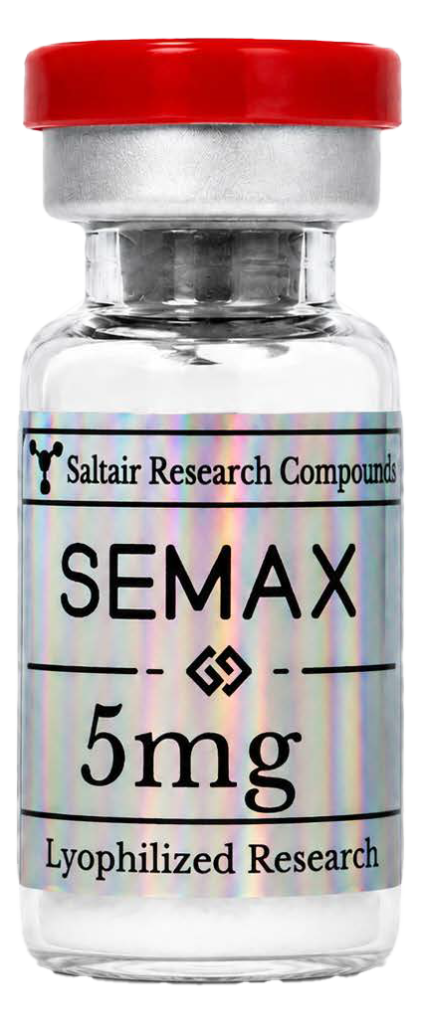
Semax is a synthetic heptapeptide derived from a fragment of adrenocorticotropic hormone (ACTH 4–10), engineered for stability so it can act in the brain without the hormonal effects of the parent molecule. Developed in Russia, it is studied as a neuroprotective and nootropic peptide.
Mechanism under investigation
Research links Semax to increased expression of neurotrophic factors — BDNF and NGF — and to modulation of the dopaminergic and serotonergic systems. In models of cerebral ischemia it shows neuroprotective activity, which is the focus of much of the preclinical work.
Research applications
- Cognition, attention, and memory in behavioral models.
- Neuroprotection in stroke and hypoxia models.
- Neurotrophic signaling (BDNF/NGF) in neuronal cultures.
Clinical outlook
Semax is notable for already being in real clinical use: in Russia it is a registered pharmaceutical applied in neurological practice, including ischemic-stroke and cognitive-support settings. Much of its human evidence is published in the Russian-language literature, and internationally registered trials remain limited — so a major opportunity for the field is to reproduce and extend those findings in Western clinical research. Interest in its neurotrophic mechanism is growing accordingly.
Frequently asked questions about Semax
Straight answers to the questions researchers most often ask. Everything below summarizes published preclinical and clinical literature; it is not medical advice, and these compounds are supplied for laboratory research only.
What is Semax?
Semax is a synthetic heptapeptide (Met-Glu-His-Phe-Pro-Gly-Pro) derived from the ACTH(4–10) fragment, developed in Russia and studied as a nootropic and neuroprotective agent. Unlike ACTH it has no hormonal (corticosteroid-releasing) activity.
What does Semax do?
In studies Semax increases BDNF and NGF expression, modulates the serotonin and dopamine systems, and shows neuroprotective effects in ischemia and oxidative-stress models. Russian clinical work reports effects on attention, memory and stroke recovery.
Is Semax approved anywhere?
Semax is an approved prescription drug in Russia (as a nasal solution) for stroke, cognitive disorders and optic-nerve disease. It is not approved by the FDA or the EMA, and outside Russia it is available only as a research compound.
Semax vs Selank — what is the difference?
Both are Russian-developed heptapeptides but from different parents: Semax comes from ACTH and is studied for cognition and neuroprotection; Selank comes from tuftsin and is studied mainly for anxiety. They are frequently compared and sometimes studied together.
What is N-acetyl Semax?
N-acetyl Semax (and N-acetyl Semax amidate) are modified versions with an acetyl group added to the N-terminus, intended to slow enzymatic breakdown. The catalog compound here is standard Semax; the modified forms have a smaller literature.
How is Semax stored?
As a lyophilized powder it is stable at room temperature short-term and frozen long-term. Reconstituted solutions are refrigerated; peptides of this size are typically used within about 30 days of reconstitution.
References
- Semax peptide targets the μ opioid receptor gene Oprm1 to promote deubiquitination and functional recovery after spinal cord injury in female mice
- Functional Connectomic Approach to Studying Selank and Semax Effects
- The Potential of the Peptide Drug Semax and Its Derivative for Correcting Pathological Impairments in the Animal Model of Alzheimer's Disease
- The peptide semax affects the expression of genes related to the immune and vascular systems in rat brain focal ischemia: genome-wide transcriptional analysis
- Semax, a Synthetic Regulatory Peptide, Affects Copper-Induced Abeta Aggregation and Amyloid Formation in Artificial Membrane Models