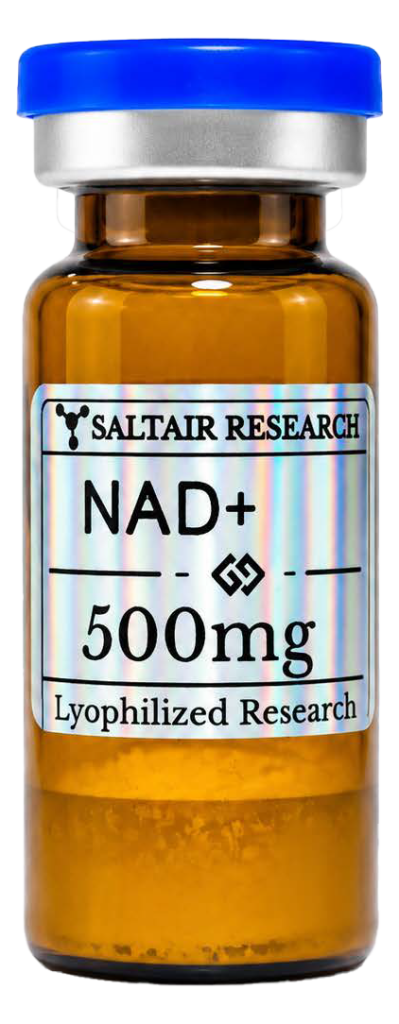
NAD+ — nicotinamide adenine dinucleotide — is a coenzyme found in every living cell and one of the most important molecules in metabolism. It is central to how cells turn nutrients into energy and to the enzymes that repair DNA and regulate aging. NAD+ levels fall with age, which is why restoring them is a major focus of longevity research.
What you’re reading about
NAD+ is usually studied alongside its precursors — the molecules the body uses to make it, chiefly NMN (nicotinamide mononucleotide) and NR (nicotinamide riboside). Much of the human evidence uses these precursors to raise NAD+ indirectly.
Mechanism under investigation
NAD+ fuels two enzyme families at the heart of aging research: the sirtuins, which regulate metabolism and cellular stress responses, and the PARPs, which repair DNA. It is also essential to mitochondrial energy production. Restoring NAD+ is hypothesized to support these systems as they decline with age.
Research applications
- Cellular energy and mitochondrial function.
- Metabolic and cardiovascular aging.
- DNA repair and cellular stress resistance.
Clinical outlook
NAD+ biology has moved firmly into human research through its precursors. Nicotinamide riboside has reached Phase 2 trials for arterial and cardiovascular health (NCT04040959), and NAD-augmentation approaches are in Phase 2 research for metabolic conditions such as diabetic kidney disease (NCT05759468). The central question researchers are chasing is where, and how much, raising NAD+ measurably benefits people — one of the liveliest debates in the science of aging.
Frequently asked questions about NAD+
Straight answers to the questions researchers most often ask. Everything below summarizes published preclinical and clinical literature; it is not medical advice, and these compounds are supplied for laboratory research only.
What is NAD+?
NAD+ (nicotinamide adenine dinucleotide) is a coenzyme present in every living cell, essential for converting nutrients into energy and for the sirtuin and PARP enzymes that repair DNA and regulate aging. Cellular NAD+ levels decline with age.
What is the difference between NAD+, NMN and NR?
NMN (nicotinamide mononucleotide) and NR (nicotinamide riboside) are precursors the body converts into NAD+. Most human trials have used the precursors because NAD+ itself is large, charged and poorly absorbed orally; our product is NAD+ itself, supplied for research.
What does NAD+ do in research?
Restoring NAD+ is studied for effects on mitochondrial function, DNA repair, metabolic health, exercise capacity and age-related decline. Human trials of NR have reached Phase 2 for cardiovascular and metabolic endpoints.
Is NAD+ FDA approved?
No. NAD+ is not an approved drug. Its precursors NR and NMN have been sold as dietary supplements, though NMN's supplement status has been contested by the FDA. Our NAD+ is supplied for laboratory research only.
Does NAD+ slow aging?
Animal studies show NAD+ restoration improves several markers of aging, but no human trial has demonstrated an effect on lifespan. Researchers are still establishing where, and by how much, raising NAD+ changes outcomes in people.
How is NAD+ stored?
Lyophilized NAD+ is hygroscopic and light-sensitive: keep it sealed, dry, cold and dark. Reconstituted solutions degrade faster than most peptides and should be used promptly.
References
- NAD+ and sirtuins in aging and disease
- Nicotinamide riboside and nicotinamide mononucleotide facilitate NAD(+) synthesis via enterohepatic circulation
- Nicotinic acid riboside maintains NAD(+) homeostasis and ameliorates aging-associated NAD(+) decline
- Chronic nicotinamide riboside supplementation is well-tolerated and elevates NAD(+) in healthy middle-aged and older adults
- Nicotinamide Riboside Augments the Aged Human Skeletal Muscle NAD(+) Metabolome and Induces Transcriptomic and Anti-inflammatory Signatures