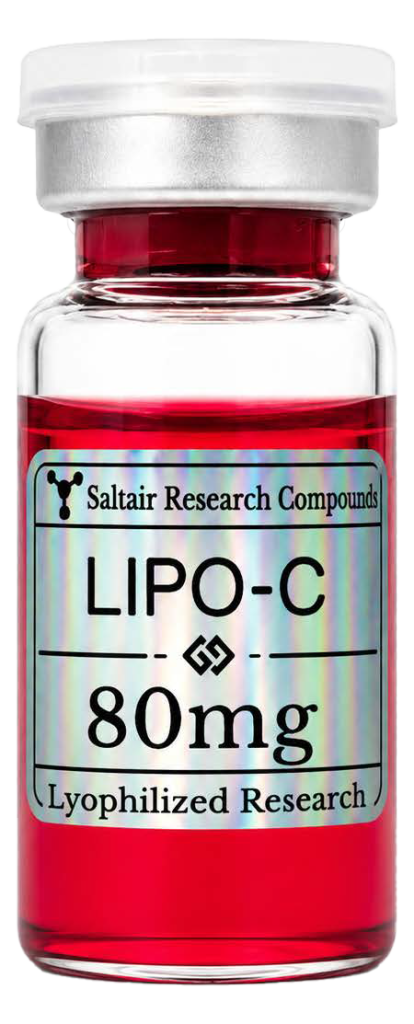
LIPO-C — sometimes labeled a “Fat Blaster” — is a lipotropic injectable blend, not a single peptide. That’s worth stating plainly up front: unlike most compounds in this library, LIPO-C is a combination of nutrients rather than a signaling peptide.
What you’re reading about
“Lipotropic” means “fat-metabolizing.” A typical LIPO-C formula combines methionine, inositol, and choline — together abbreviated MIC — usually with L-carnitine and B-vitamins. Each is a nutrient the body already uses in fat and energy metabolism.
The components
- Methionine — an essential amino acid involved in lipid processing.
- Inositol — a sugar alcohol involved in cell signaling.
- Choline — a nutrient essential to how the liver transports fat.
- L-carnitine — shuttles fatty acids into mitochondria to be burned for energy.
Research outlook
The honest picture: while each individual nutrient has an established role in metabolism, rigorous clinical evidence for lipotropic injections as a combined fat-loss treatment is limited. The components are best understood through their own nutritional science, and well-controlled trials of the blend itself remain sparse — a genuine gap where better research is needed.
Frequently asked questions about LIPO-C (Lipotropic Injection)
Straight answers to the questions researchers most often ask. Everything below summarizes published preclinical and clinical literature; it is not medical advice, and these compounds are supplied for laboratory research only.
What is LIPO-C?
LIPO-C is a lipotropic injectable blend — typically methionine, inositol and choline (MIC) with L-carnitine and B vitamins. It is a nutrient combination, not a peptide, and is included in this library because it is often studied and sold alongside research peptides.
What does "lipotropic" mean?
Lipotropic compounds are nutrients that participate in fat metabolism and the transport of fat out of the liver. Methionine, inositol and choline are the classic trio; L-carnitine shuttles fatty acids into mitochondria to be burned.
Does LIPO-C cause weight loss?
The evidence is thin. Small studies of lipotropic injections report modest effects, generally alongside diet and exercise, and there are no large controlled trials. It is studied as a metabolic-support formulation rather than a weight-loss agent in its own right.
Is LIPO-C FDA approved?
No. Lipotropic injections are compounded formulations, not approved drugs. Our LIPO-C is supplied for laboratory research only.
How does LIPO-C differ from the GLP peptides?
Completely. The GLP compounds are hormone-receptor agonists with large clinical-trial programs; LIPO-C is a nutrient blend with a small, low-certainty literature. They are grouped under weight research on our shop only because researchers study both in metabolic models.
References
- TXNIP/VDUP1 attenuates steatohepatitis via autophagy and fatty acid oxidation
- Formononetin promotes fatty acid β-oxidation to treat non-alcoholic steatohepatitis through SIRT1/PGC-1α/PPARα pathway
- Inhibition of carnitine palmitoyltransferase 1A in hepatic stellate cells protects against fibrosis
- Dietary choline, but not L-carnitine, increases circulating lipid and lipoprotein concentrations, without affecting body composition, energy expenditure or respiratory quotient in lean and obese male cats during weight maintenance
- Choline and methionine differentially alter methyl carbon metabolism in bovine neonatal hepatocytes