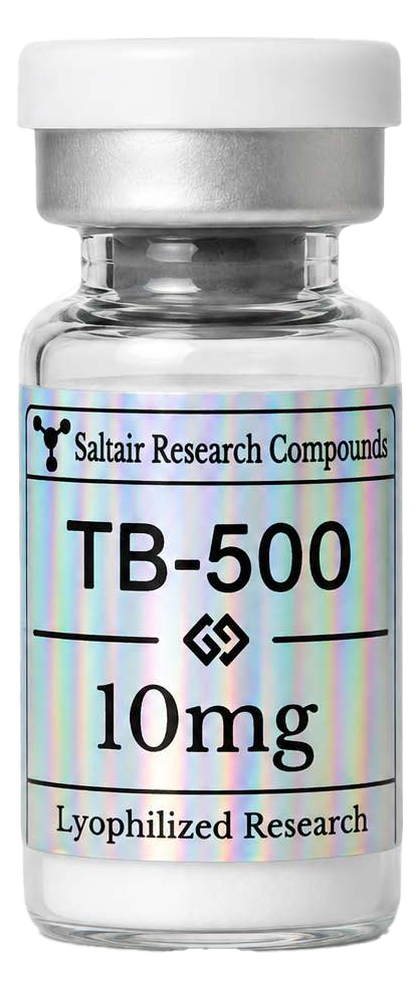
TB-500 is a synthetic peptide corresponding to the biologically active region of Thymosin β-4, a naturally occurring protein central to cell migration and tissue repair. By reproducing the actin-binding fragment of that protein, TB-500 gives researchers a smaller, more workable tool for studying the same regenerative pathways.
Mechanism under investigation
Thymosin β-4 is a master regulator of actin, the cytoskeletal protein cells use to change shape and move. In experimental models this activity drives cell migration, angiogenesis, and the recruitment of repair cells to injured tissue — the regenerative cascade TB-500 research aims to harness.
Research applications
- Wound-healing and dermal-repair models.
- Cardiac and skeletal-muscle repair after injury.
- Endothelial migration and new-vessel formation.
Clinical outlook
This is one of the more clinically advanced peptides in the repair space — largely through its parent molecule, Thymosin β-4. Human Phase 2 trials have studied it in acute myocardial infarction (NCT05485818) and pressure ulcers (NCT00382174), while the ophthalmic formulation RGN-259 has advanced to Phase 3 for neurotrophic keratopathy (NCT05555589) and dry-eye disease. The TB-500 fragment itself has now entered a Phase 1/2 trial examining cardiovascular biomarkers and endothelial function (NCT07487363). Researchers are investigating whether this one regenerative pathway can be translated into treatments spanning cardiac recovery, chronic wounds, and corneal healing.
Frequently asked questions about TB-500 (Thymosin β-4)
Straight answers to the questions researchers most often ask. Everything below summarizes published preclinical and clinical literature; it is not medical advice, and these compounds are supplied for laboratory research only.
What is TB-500?
TB-500 is a synthetic peptide corresponding to the active region of thymosin beta-4 (Tβ4), a naturally occurring 43-amino-acid protein present in nearly all human cells. It is studied for its role in cell migration, wound repair and reduced scar formation.
What is the difference between TB-500 and thymosin beta-4?
Thymosin beta-4 is the full 43-amino-acid protein; TB-500 is a shorter synthetic fragment centered on the actin-binding LKKTETQ sequence that carries most of the migration-promoting activity. Research on the full protein and the fragment is usually read together.
How does TB-500 work?
TB-500 binds actin, the protein that forms the cell's internal scaffold, and by regulating actin polymerization it promotes cell migration, angiogenesis and the recruitment of repair cells to injured tissue. It also down-regulates inflammatory signaling and appears to reduce fibrosis.
What has TB-500 been studied for?
Cardiac repair after infarction, corneal and dermal wound healing, tendon and ligament injury, and hair-follicle models. Thymosin β4 itself has been through Phase 2 human trials for dry-eye disease and epidermolysis bullosa.
Is TB-500 FDA approved?
No. Neither TB-500 nor thymosin β4 is an approved drug. Thymosin β4 has been studied in registered clinical trials, but TB-500 is supplied only for laboratory research.
Why are TB-500 and BPC-157 used together in research?
Because their mechanisms are complementary rather than overlapping: BPC-157 drives growth-factor and nitric-oxide signaling while TB-500 drives actin-mediated cell migration. The BPC-157 + TB-500 profile covers the rationale in detail.
References
- Therapeutic Peptides in Orthopaedics: Applications, Challenges, and Future Directions
- Injectable Peptide Therapy: A Primer for Orthopaedic and Sports Medicine Physicians
- beta-Thymosins
- Thymosin β4: a multi-functional regenerative peptide. Basic properties and clinical applications
- Safety and Efficacy of Approved and Unapproved Peptide Therapies for Musculoskeletal Injuries and Athletic Performance
- Thymosin β4 Promotes Dermal Healing