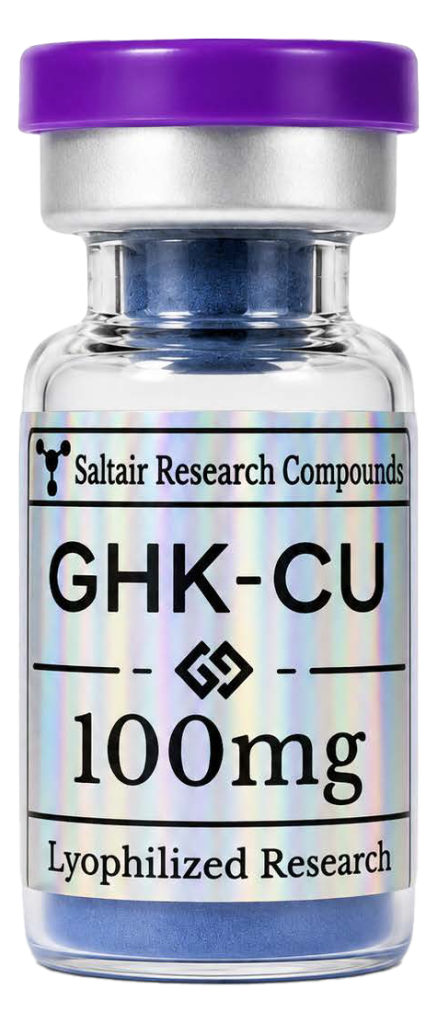
GHK-Cu is a naturally occurring copper-binding tripeptide — glycyl-L-histidyl-L-lysine bound to a copper ion. Present in human plasma, saliva, and urine, its levels decline with age. It is one of the most studied peptides in skin, wound, and regenerative research.
What you’re reading about
GHK-Cu is often simply called the copper peptide. The “Cu” is copper — and the tripeptide’s ability to carry copper into tissue is central to how it is thought to work.
Mechanism under investigation
Research links GHK-Cu to collagen and extracellular-matrix synthesis, antioxidant activity, and the signaling that coordinates wound repair and tissue remodeling. Its copper-transport role connects it to enzymes essential to skin and connective-tissue health.
Research applications
- Skin repair, firmness, and the appearance of aging.
- Wound healing and tissue remodeling.
- Hair-follicle and scalp research.
Clinical outlook
GHK-Cu has direct human research behind it. A Phase 2 trial is recruiting to study a topical GHK-Cu gel for acute skin-wound healing (NCT07437586), and a Phase 4 study has assessed its impact on facial skin quality and hydration (NCT05932732). These trials aim to confirm in people what decades of laboratory and cosmetic research have suggested about copper-peptide repair.
Frequently asked questions about GHK-Cu (Copper Peptide)
Straight answers to the questions researchers most often ask. Everything below summarizes published preclinical and clinical literature; it is not medical advice, and these compounds are supplied for laboratory research only.
What is GHK-Cu?
GHK-Cu is the copper complex of the tripeptide glycyl-L-histidyl-L-lysine, a naturally occurring peptide in human plasma whose levels fall sharply with age. It is one of the most-studied peptides in skin, hair and wound-healing research.
What does GHK-Cu do?
In studies GHK-Cu stimulates collagen and elastin synthesis, attracts repair cells to wounds, promotes hair-follicle growth, and resets the expression of thousands of genes toward a younger, more reparative pattern in gene-array analyses.
Is GHK-Cu the same as copper peptides in skincare?
Yes — "copper peptide" in cosmetics almost always means GHK-Cu. It is used topically in skincare products worldwide; the research-grade peptide sold here is the same molecule at defined purity for laboratory study.
How does GHK-Cu work?
GHK binds copper(II) tightly and delivers it to cells; the complex modulates growth factors (including TGF-β and VEGF), metalloproteinases and their inhibitors, and antioxidant enzymes. Its gene-expression effects appear to be broad rather than single-target.
Is GHK-Cu FDA approved?
GHK-Cu is not an approved drug. It is permitted as a cosmetic ingredient, which is a different regulatory category; the injectable research product is for laboratory use only.
What is the difference between the 50mg and 100mg GHK-Cu?
Only the fill size — the same peptide, supplied in two vial sizes for different experimental scales. Both link to this profile.
References
- GHK Peptide as a Natural Modulator of Multiple Cellular Pathways in Skin Regeneration
- The potential of GHK as an anti-aging peptide
- Microneedle-Mediated Delivery of Copper Peptide Through Skin
- The human tri-peptide GHK and tissue remodeling
- Food-Derived Tripeptide-Copper Self-Healing Hydrogel for Infected Wound Healing