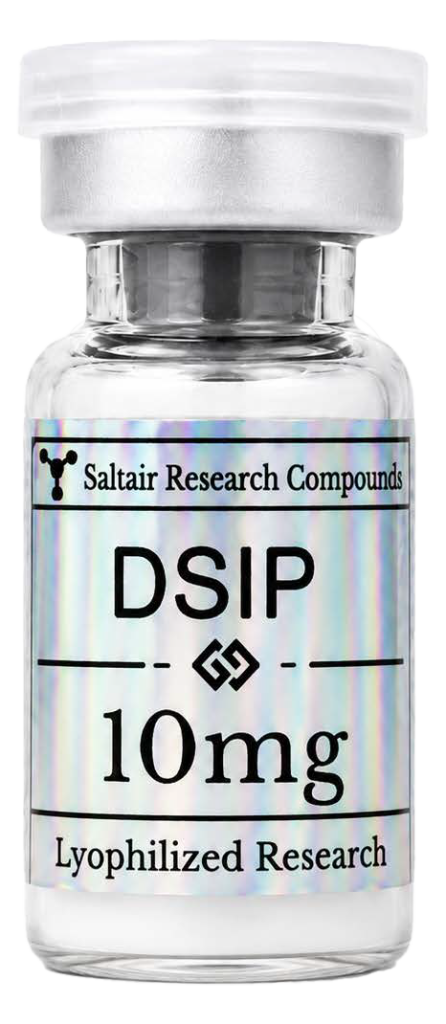
DSIP — Delta Sleep-Inducing Peptide — is a naturally occurring nonapeptide first isolated from cerebral venous blood, named for its association with the slow, delta-wave activity of deep sleep. It remains one of the more intriguing and still-debated endogenous signaling peptides.
Mechanism under investigation
Research connects DSIP to the regulation of sleep architecture, modulation of stress hormones (ACTH and cortisol), and possible roles in pain and thermoregulation. Its precise receptor targets are still being worked out, which is part of what makes it an active research subject.
Research applications
- Sleep regulation and circadian models.
- Stress-hormone and HPA-axis signaling.
- Chronic-pain and withdrawal models.
Clinical outlook
DSIP has a genuine, if early, human-research history: studies in the 1980s and 1990s explored it in sleep disturbance, chronic pain, and stress. As neuroscience renews its interest in the body’s own sleep-regulating peptides, DSIP is being revisited — and researchers are asking whether a naturally occurring sleep signal could inform a new generation of approaches to sleep and stress. Modern registered trials are still limited, making it a compelling target for translational work.
Frequently asked questions about DSIP (Delta Sleep-Inducing Peptide)
Straight answers to the questions researchers most often ask. Everything below summarizes published preclinical and clinical literature; it is not medical advice, and these compounds are supplied for laboratory research only.
What is DSIP?
DSIP — Delta Sleep-Inducing Peptide — is a naturally occurring nonapeptide (Trp-Ala-Gly-Gly-Asp-Ala-Ser-Gly-Glu) first isolated from rabbit cerebral venous blood in 1977 and named for its association with delta-wave (deep) sleep.
What does DSIP do?
Studies connect DSIP to sleep architecture, to modulation of stress hormones (ACTH and cortisol), and to pain and body-temperature regulation. Its effects are described as normalizing rather than sedating — it does not act like a hypnotic drug.
How does DSIP work?
No dedicated receptor has been identified. Proposed mechanisms include interaction with opioid and GABA systems and effects on hypothalamic-pituitary signaling. The uncertainty about mechanism is one reason DSIP remains a debated peptide.
Has DSIP been studied in humans?
Yes — mostly in small studies from the 1980s and 1990s in insomnia, chronic pain and alcohol withdrawal. Results were mixed, and no modern large-scale trial has followed.
Is DSIP FDA approved?
No. DSIP has never been approved as a drug in any jurisdiction and is supplied for laboratory research only.
How is DSIP stored?
Lyophilized DSIP is stable frozen long-term; reconstituted solution is refrigerated and used within about a month. Like most short peptides it is sensitive to repeated freeze–thaw cycles.