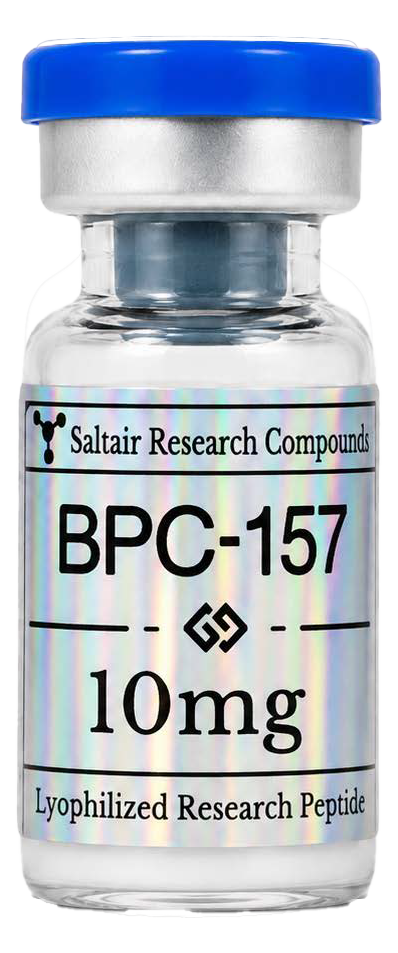
BPC-157 is a synthetic pentadecapeptide — a stable 15-amino-acid sequence derived from a protein found in gastric juice, which gives it the name “Body Protection Compound.” It is one of the most extensively studied peptides in tissue-repair research, prized in the lab for its stability in solution.
Mechanism under investigation
Research in animal and cell models attributes BPC-157’s activity primarily to angiogenesis — the growth of new blood vessels — through the VEGFR2 pathway and the nitric-oxide system, alongside modulation of the growth-factor signaling that drives connective-tissue repair. Together these pathways describe a molecule that appears to accelerate the body’s own repair machinery.
Research applications
- Tendon-, ligament-, and muscle-injury repair in animal models.
- Protection and healing of gastrointestinal tissue.
- Vascular and growth-factor signaling that underpins soft-tissue recovery.
Clinical outlook
BPC-157 is now making the leap from animal research into human study. An early Phase 1 trial evaluated its safety and pharmacokinetics in healthy volunteers (NCT02637284), and a Phase 2 trial is currently recruiting to test BPC-157 in acute hamstring muscle-strain repair (NCT07437547) — a direct test of whether the tissue-repair signaling seen in the lab translates to human musculoskeletal injury. If it holds up, researchers see potential across sports medicine, orthopaedic recovery, and gastrointestinal healing. Those are the questions this next wave of human trials is built to answer.
Frequently asked questions about BPC-157
Straight answers to the questions researchers most often ask. Everything below summarizes published preclinical and clinical literature; it is not medical advice, and these compounds are supplied for laboratory research only.
What is BPC-157?
BPC-157 (Body Protection Compound-157) is a synthetic 15-amino-acid peptide derived from a protein found in human gastric juice. It is one of the most-studied research peptides for tissue repair, with animal work spanning tendon, ligament, muscle, bone, gut and blood-vessel models.
What does BPC-157 do in research studies?
In animal and cell studies BPC-157 is reported to accelerate healing of tendons, ligaments and muscle, protect the gut lining, and promote angiogenesis (new blood-vessel growth). The most consistent findings are in rodent tendon-transection, muscle-crush and gastric-ulcer models.
How does BPC-157 work?
The proposed mechanisms include upregulation of growth-factor signaling (notably VEGF and the nitric-oxide system), activation of the FAK–paxillin pathway that lets fibroblasts migrate into injured tissue, and modulation of the dopamine and serotonin systems in the gut–brain axis. No single receptor has been identified.
Is BPC-157 FDA approved?
No. BPC-157 is not approved by the FDA for any use, and the FDA has stated it may not be legally compounded. It is sold and studied strictly as a laboratory research compound.
Has BPC-157 been tested in humans?
Formal human evidence is minimal. A small pilot study reported on intra-articular use in knee pain, and early-phase work on inflammatory bowel disease was announced but no completed, published randomized trial exists. The overwhelming majority of the literature is preclinical.
What is the difference between BPC-157 and TB-500?
They work through different mechanisms and are often studied together. BPC-157 acts mainly through growth-factor and nitric-oxide signaling and is strongly associated with gut and tendon models; TB-500 is a fragment of thymosin β4 that regulates actin and cell migration. Our combined profile explains why the pairing is common.
How is BPC-157 stored?
Lyophilized (powder) BPC-157 is stable at room temperature for weeks and for long periods frozen, kept dry and away from light. Once reconstituted with bacteriostatic water it is refrigerated and typically used within about 30 days.
References
- Multifunctionality and Possible Medical Application of the BPC 157 Peptide-Literature and Patent Review
- Emerging Use of BPC-157 in Orthopaedic Sports Medicine: A Systematic Review
- Gastric pentadecapeptide body protection compound BPC 157 and its role in accelerating musculoskeletal soft tissue healing
- Intra-Articular Injection of BPC 157 for Multiple Types of Knee Pain
- Stable Gastric Pentadecapeptide BPC 157 and Wound Healing
- BPC 157 and Standard Angiogenic Growth Factors. Gastrointestinal Tract Healing, Lessons from Tendon, Ligament, Muscle and Bone Healing