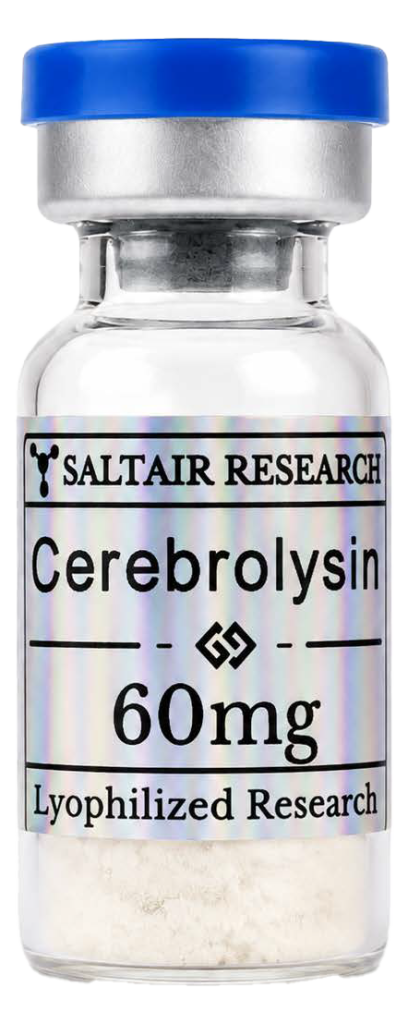
Cerebrolysin is unusual among the compounds in this library: it is not a single peptide but a standardized mixture of low-molecular-weight neuropeptides and free amino acids produced from purified brain proteins. It is among the most extensively studied neurotrophic preparations in the world.
Mechanism under investigation
Cerebrolysin is described as neurotrophic and neuroprotective, mimicking the action of endogenous growth factors such as NGF and BDNF to support neuronal survival, plasticity, and repair. This mechanism underlies its study across a range of neurological conditions.
Research applications
- Acute ischemic stroke and post-stroke recovery.
- Vascular dementia and Alzheimer’s research.
- Traumatic brain injury and neurorehabilitation.
Clinical outlook
Cerebrolysin has one of the deepest clinical records of any neuropeptide product — dozens of registered human trials. Randomized, placebo-controlled studies have investigated it in stroke and dementia (NCT01787123), and active Phase 4 research continues, including work on post-stroke language recovery in aphasia (NCT06897176). It is already approved and used clinically in numerous countries across Europe and Asia — a real example of a neuropeptide preparation that has completed much of the bench-to-bedside journey, even as researchers continue to define exactly where it helps most.
Frequently asked questions about Cerebrolysin
Straight answers to the questions researchers most often ask. Everything below summarizes published preclinical and clinical literature; it is not medical advice, and these compounds are supplied for laboratory research only.
What is Cerebrolysin?
Cerebrolysin is a standardized mixture of low-molecular-weight neuropeptides and free amino acids produced from purified porcine brain proteins. It is not a single peptide, and it has one of the largest clinical-trial records of any neurotrophic preparation.
What is Cerebrolysin used for?
It is approved and used clinically in a number of countries for stroke, traumatic brain injury and dementia, and has been studied in dozens of registered trials. Research explores its neurotrophic, neuroprotective and neuroplasticity-promoting effects.
Is Cerebrolysin FDA approved?
No. Cerebrolysin is approved in several countries in Europe and Asia but not in the United States, where it is available only as a research compound.
How does Cerebrolysin work?
Its peptide fractions mimic endogenous neurotrophic factors such as BDNF, NGF and CNTF, supporting neuronal survival, synaptic plasticity and neurogenesis while reducing excitotoxicity and inflammation.
What does the clinical evidence say about Cerebrolysin in stroke?
Randomized trials such as CARS reported improved motor recovery when Cerebrolysin was added to rehabilitation after ischemic stroke, and a Cochrane review found a benefit signal with uncertainty about mortality data. Active Phase 4 research continues, including in post-stroke aphasia.
How is Cerebrolysin supplied and stored?
Clinically it is a ready solution; our research product is lyophilized (60mg), stored cool and dry, and reconstituted for use. As a protein-derived mixture it should not be exposed to heat or repeated freeze–thaw.
References
- Modulation of neurotrophic factors in the treatment of dementia, stroke and TBI: Effects of Cerebrolysin
- Safety profile of Cerebrolysin: clinical experience from dementia and stroke trials
- [Therapy prospects for post-stroke aphasia]
- Cerebrolysin in vascular dementia: improvement of clinical outcome in a randomized, double-blind, placebo-controlled multicenter trial
- Diabetes and the brain: issues and unmet needs