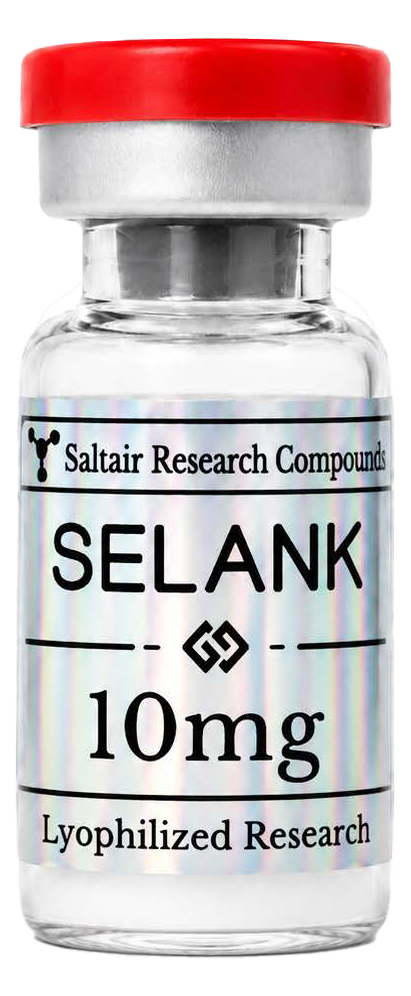
Selank is a synthetic heptapeptide based on the immunomodulatory peptide tuftsin, developed in Russia as an anxiolytic — an anti-anxiety agent — designed to act without the sedation or dependence associated with conventional options.
Mechanism under investigation
Research associates Selank with modulation of GABAergic and serotonergic signaling, changes in BDNF expression, and effects on immune mediators such as interleukins — a mix of neurological and immunological activity that distinguishes it from classical anxiolytics.
Research applications
- Anxiety and stress-resilience behavioral models.
- Cognition and attention.
- Neuro-immune signaling.
Clinical outlook
Like Semax, Selank is used clinically in Russia as a registered anxiolytic, with a human-research record concentrated in Russian literature. The translational goal for researchers elsewhere is clear: to confirm its anxiolytic and cognitive effects under internationally registered, placebo-controlled conditions. Its non-sedating mechanism is what keeps it of interest as a research tool in anxiety and stress biology.
Frequently asked questions about Selank
Straight answers to the questions researchers most often ask. Everything below summarizes published preclinical and clinical literature; it is not medical advice, and these compounds are supplied for laboratory research only.
What is Selank?
Selank is a synthetic heptapeptide (Thr-Lys-Pro-Arg-Pro-Gly-Pro) built from the immune peptide tuftsin plus a stabilizing Pro-Gly-Pro tail. It was developed in Russia and is studied primarily for anxiolytic (anti-anxiety) and nootropic effects.
How does Selank work?
Studies point to modulation of GABAergic transmission, effects on the serotonin and enkephalin systems, and increased BDNF expression. It is described as anxiolytic without the sedation or dependence seen with benzodiazepines in animal comparisons.
Is Selank approved?
Selank is approved in Russia as a nasal spray for anxiety disorders. It is not approved by the FDA or EMA and is supplied elsewhere for laboratory research only.
Selank vs Semax — which is studied for what?
Selank is the anxiety-and-mood compound; Semax is the cognition-and-neuroprotection compound. They share Russian origins, a seven-residue length and the Pro-Gly-Pro stabilizing tail, but come from different parent peptides.
Does Selank affect the immune system?
Its parent peptide, tuftsin, is an immune-stimulating fragment of IgG, and Selank retains some immunomodulatory activity in studies — including effects on interleukin-6 expression and T-helper balance. This is a secondary research direction alongside its central-nervous-system effects.
What is the half-life of Selank?
Selank is broken down quickly by peptidases; the Pro-Gly-Pro tail was added specifically to extend its stability. Reported effects in studies persist well beyond the peptide's presence in blood, consistent with downstream gene-expression changes rather than sustained receptor occupancy.
References
- Functional Connectomic Approach to Studying Selank and Semax Effects
- Selank, a Peptide Analog of Tuftsin, Attenuates Aversive Signs of Morphine Withdrawal in Rats
- Peptide Selank Enhances the Effect of Diazepam in Reducing Anxiety in Unpredictable Chronic Mild Stress Conditions in Rats
- Peptide-based Anxiolytics: The Molecular Aspects of Heptapeptide Selank Biological Activity
- Selank, Peptide Analogue of Tuftsin, Protects Against Ethanol-Induced Memory Impairment by Regulating of BDNF Content in the Hippocampus and Prefrontal Cortex in Rats